
The first days of school set the tone for the year, and simple, hands-on activities help everyone feel calm and confident. Short, predictable tasks lower cognitive load, which means children can focus on one thing at a time while their executive function warms up.
Fine motor play “wakes up” the small hand muscles needed for pre-writing and cutting. Social games invite language, listening, and empathy—key parts of social-emotional learning (SEL).
In this post, you’ll find low-mess art projects, first week icebreakers for PreK, 5 minute literacy games, fine motor crafts ideas using paper bags, All About Me activities, and family-friendly learning at home.
First Week Icebreakers for PreK
Begin with connection.
Try a Name Chant and Motion where you say a child’s name, invite them to choose a movement, and have the class echo both. In minutes, you’ll build name recognition, practice syllables, and grow confidence—no materials needed.
Add a Find-a-Friend Color Hunt by giving children color cards or inviting them to stand near a matching classroom color. Partners share one “I like…” sentence, which supports communication skills and categorization while gently encouraging conversation.
Round out the routine with a Feelings Faces Flip.
- Children choose a feelings card, show the face, and complete the sentence “I feel… when…,” which builds emotion vocabulary and empathy.
- Offer visual supports for multilingual learners and quiet signals for shy students so everyone has a safe on-ramp into the group.
All About Me Activities
Celebrate identity while building vocabulary and routines.
In My Name, My Rhythm, clap or tap the syllables in each child’s name and count them together.
- This playful moment strengthens phonological awareness and early math.
Create a Pocket Portrait using cardstock, crayons, and a small mirror.
- Children draw themselves and label features and favorites, which builds descriptive language and fine motor control.
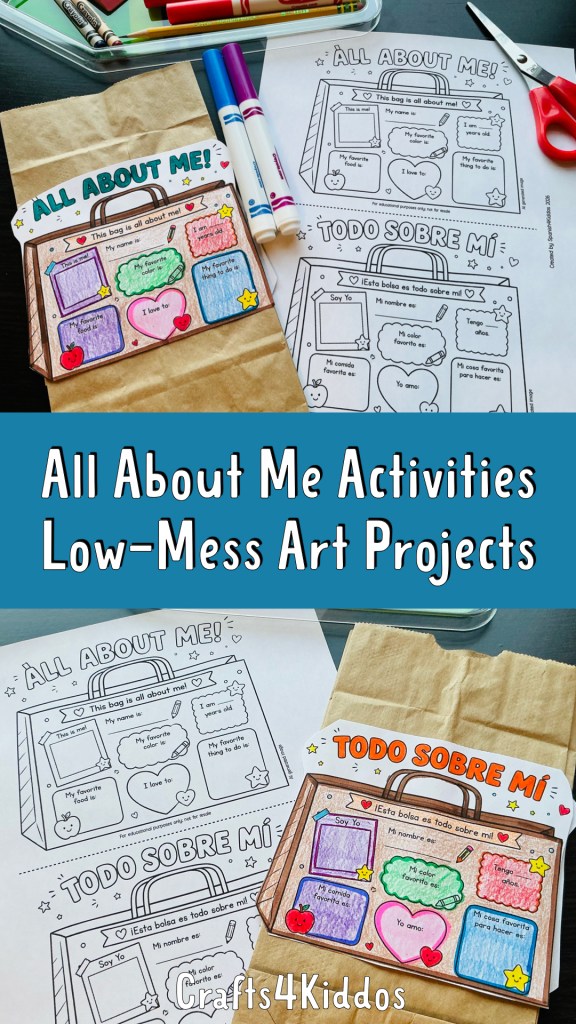
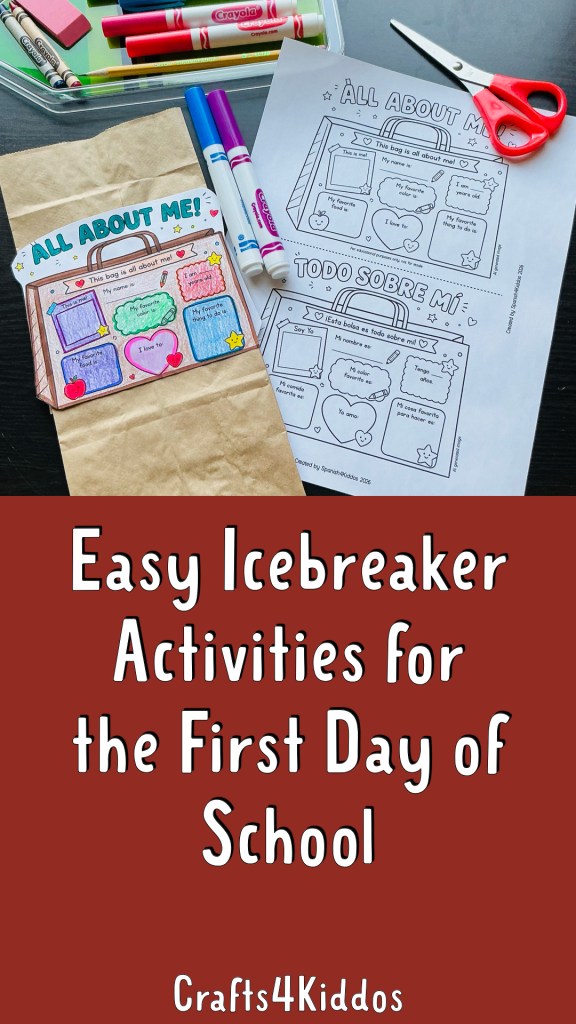
Use a paper bag for All About Me Bilingual Game
- Decorate a paper bag with an All About Me template
- Play a fun game of matching school supplies in English and Spanish.
Add a Family Culture Map by placing sticky notes on a world or local map to show family roots and share one tradition.
- Support language with simple frames like “I am… / Yo soy…” and “I like… / Me gusta…,” which invite participation and validate home languages.
Low-Mess Art Projects
Keep creativity high and clean-up small.
Try Tape-Resist Initials by placing painter’s tape in the shape of a child’s initial, coloring over it, and peeling to reveal bold letter art. This project strengthens planning and wrist stability while reinforcing letter recognition.
Build Sticker Shape Landscapes:
- Arrange circle, square, and triangle stickers to create homes, parks, or imaginary worlds, then invite children to dictate a quick story about their scene.
Use Dot-Stamp Patterns:
- Use washable daubers or stamps to make AB and ABC patterns, count totals, and compare sets.
- Each project finishes fast and wipes clean in under two minutes, making transitions smooth and stress-free.
5 Minute Literacy Games
Short bursts of literacy practice add up.
Play Syllable Stomp by saying a word and stomping once per syllable. Children love the movement, and you strengthen syllable segmentation at the same time.
Use a Rhyme Time Mystery Bag filled with small, safe objects such as a toy cat, ball, or key. Pull one item and generate rhymes together, building phonological awareness and vocabulary.
Set up an Alphabet Parking Lot:
- Draw parking “spots” with letters on a sheet of paper and invite children to park toy cars on the letter you name or sound you give.
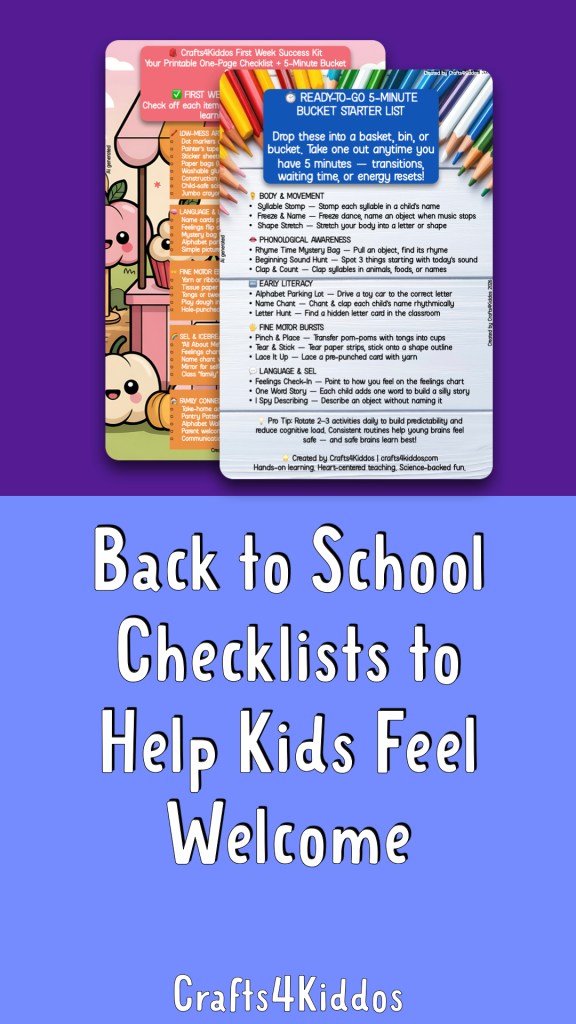
- Keep a small “5-minute bucket” within reach for these quick transitions.
Fine Motor Crafts Ideas Using Paper Bags
Paper bags are powerful tools for fine motor growth.
Make Paper Bag Puppets:
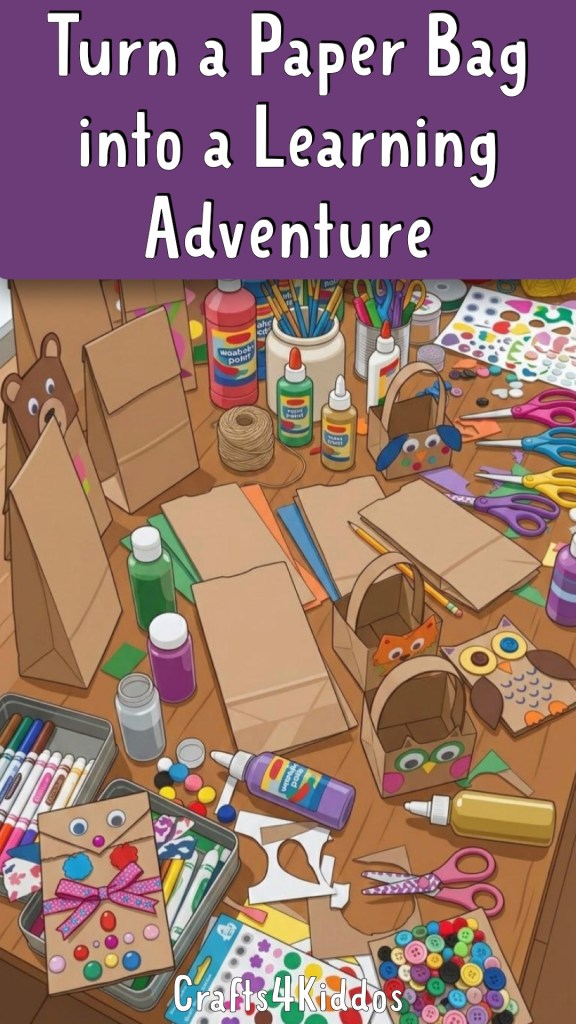
- Decorate lunch paper bags with crayons, stickers, and simple cutouts, then invite children to put on a short show.
- This builds pincer grasp, sequencing, and expressive language.
Try Bag Weaving:
- Cut slits into a flattened bag and weave paper strips over and under.
- Children practice bilateral coordination, tracking, and patterning.
Create a Tear-and-Stick Mosaic by
- Tear bag pieces into small bits and fill a shape outline with glue sticks.
- Tearing, pinching, and pressing strengthen intrinsic hand muscles, which supports early writing stamina and control.
Family-Friendly Learning at Home
Extend classroom learning with simple routines families can finish in under ten minutes.
Build Pantry Patterns with cereal or crackers and say the patterns aloud to reinforce math talk. Turn favorite books into Story Stretchers by gathering three household props, retelling the story, and trying a new ending, which boosts comprehension and creativity.
Go on a Neighborhood Alphabet Walk to spot letters on signs and storefronts, and snap photos if you like. Offer bilingual prompts at home to welcome all languages and keep the focus on joyful practice.
A Sample First-Week Plan
- On Day 1, use a warm icebreaker and close with My Name, My Rhythm to learn names and sounds.
- On Day 2, make Tape-Resist Initials and play Syllable Stomp during clean-up or transitions.
- On Day 3, create Paper Bag Puppets and explore rhymes with the Mystery Bag.
- On Day 4, build Sticker Shape Landscapes and drive through the Alphabet Parking Lot.
- On Day 5, practice the Feelings Faces Flip and send home Pantry Patterns as a simple family activity.
Quick Prep That Saves Time
- Gather a small set of materials you can reuse all week: paper bags, cardstock, construction paper, crayons or markers, glue sticks, stickers, painter’s tape, simple shape and emoji cards, toy cars, and a handful of small objects for the rhyme bag.
- Pre-cut weaving strips, write name cards in advance, and print a few visual supports.
- Place everything in a labeled bin so your “5-minute bucket” is always ready for a smooth transition.
Inclusion, Safety, and Differentiation
Offer choices such as stickers instead of glue or crayons instead of markers to meet sensory needs. Pair spoken directions with pictures and gestures, and provide sentence frames to support multilingual learners.
Choose non-toxic, washable materials and supervise small objects to keep everyone safe while they explore.
Summary
With a few minutes, a kind routine, and simple materials, you can build community, language, and confidence from day one. Low-mess art projects, first week icebreakers for PreK, 5 minute literacy games, fine motor crafts ideas using paper bags, All About Me activities, and family-friendly learning at home all work together to make learning joyful and sustainable.
If you’d like a printable one-page checklist and a ready-to-go “5-minute bucket” starter list, visit the FREE Resources area for more ideas. Or, comment below what’s your favorite back to school learning activity.
Share this:

Discover more from Crafts4Kiddos
Subscribe to get the latest posts sent to your email.